|
|

|
|
|
|

Annissa Malvoisin
Bard Graduate Center/Brooklyn Museum Postdoctoral Fellow in the Arts of Africa, 2021-2024
Annissa Malvoisin’s research specializes in Egyptology, Nubian archaeology, and Museum Studies. Her doctoral thesis at the University of Toronto investigates the ceramic production and trade industry during Meroitic Nubia and its potential far-reaching networks linking the Nile Valley to Iron Age West African cultures. She examines these networks by identifying artistic similarities on pottery which she combines with piecing together the objects’ biography in order to better understand Nubian collections in North American museums. She also explores questions of provenance for object-based research in museum collections. She earned her Master of Museum Studies from the Faculty of Information at the University of Toronto and incorporates museum theory and practice into her academic and professional work. She has worked with collections at the Royal Ontario Museum in the Department of Arts and Culture: Global Africa and in Ancient Egypt and Nubia, as well as with the Bioarchaeology of Nubia Expedition at Arizona State University.
|
|

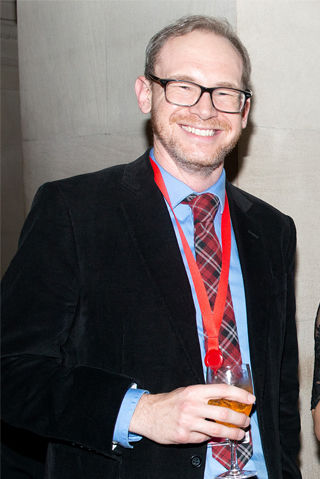
Henry Colburn earned a PhD in classical art and archaeology from the University of Michigan. His research focuses on the art and archaeology of ancient Iran and on the regions of the Near East, Eastern Mediterranean, and Central Asia that interacted with Iran prior to the advent of Islam. His first book on this subject, Archaeology of Empire in Achaemenid Egypt, was published earlier this year. He has held fellowships at the Harvard Art Museums, the Getty Research Institute, and the Metropolitan Museum of Art and taught at the University of California, Irvine; the University of Southern California, the University of California, Riverside; and the Cooper Union. He is also a research associate of the Kelsey Museum of Archaeology at the University of Michigan by virtue of his ongoing work on the seals of the Persepolis Fortification Archive. His current project is to create a new edition of Mikhail Rostovtzeff’s 1935 essay Dura and the Problem of Parthian Art. Rostovtzeff saw Parthian art as a cogent and vibrant phenomenon, rather than a degraded form of Greek art, and Colburn’s new edition will update this crucial essay and make it available to a new generation of scholars while at the same time demonstrating how it remains the best lens through which to view this fascinating material.
|
|

Charmaine Nelson will be completing her fellowship, which began in the 2020-21 academic year, this fall. Nelson is Tier 1 Canada Research Chair (CRC) in Transatlantic Black Diasporic Art and Community Engagement at NSCAD University. She received her PhD in art history from the University of Manchester (UK) in 2001. Her research and teaching interests include postcolonial and Black feminist scholarship, transatlantic slavery studies, and Black diaspora studies. She has made ground-breaking contributions to the fields of the visual culture of slavery, race and representation, and Black Canadian studies. Nelson has published six books including the edited book Ebony Roots, Northern Soil: Perspectives on Blackness in Canada (Cambridge Scholars Press, 2010), and the single-authored books The Color of Stone: Sculpting the Black Female Subject in Nineteenth-Century America (University of Minnesota Press, 2007) and Slavery, Geography, and Empire in Nineteenth-Century Marine Landscapes of Montreal and Jamaica (Routledge/Taylor & Francis, 2016). Her seventh book, Towards an African Canadian Art History: Art, Memory, and Resistance (Captus Press, 2018), is the first to consolidate the field of African Canadian art history. Her current research project juxtaposes fugitive slave advertisements, portraiture, and genre studies from Nova Scotia, Quebec, and Jamaica to examine differences in the visual dimensions of creolization between slave minority and slave majority sites of the British Atlantic world. She has garnered several prestigious fellowships and appointments including a Caird Senior Research Fellowship, National Maritime Museum, UK (2007) and a Fulbright Visiting Research Chair at the University of California – Santa Barbara (2010). In 2016, she was named a Fellow of the Royal Society of Canada, College of New Scholars, Artists, and Scientists and in 2017–18 she was the William Lyon Mackenzie King Visiting Professor of Canadian Studies at Harvard University. Prior to joining NSCAD University she was professor of art history at McGill University.
|
|

Isabel Oleas-Mogollón
Fields of the Future Research Fellow, Spring 2022
Isabel Oleas-Mogollón is an independent scholar of the history of Spanish American art and visual and material culture with an emphasis in the Audiencia of Quito. Her scholarly work focuses on post-colonial theory, religious patronage, and gender and has been published in Religion and the Arts, Latin American and Latinx Visual Culture, and Hemisphere: Visual Cultures of the Americas. She is currently working on her first book project, Imperial Power and Christian Triumph, which examines the agency of reflective surfaces and their function in shaping imperial discourses, supporting institutional agendas, and in structuring private and public religious expressions. Besides providing an overview of eighteenth-century Andean religious visual culture and its reliance on reflective surfaces, the book argues that reflective surfaces enhanced the devotees’ emotional connection with Christian images and prompted curated forms of spiritual development and social interaction.
|
|
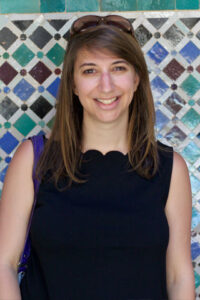
Ariel Fein
Fields of the Future Research Fellow, Spring 2022
Ariel Fein received her PhD in Byzantine and Islamic art history from Yale University. Her scholarship explores the intersection of Christian and Islamic visual cultures, in particular the circulation of objects, peoples, and ideas across the frontier zones of the medieval Mediterranean. She is currently working on two projects. Her book project, Emir of Emirs: George of Antioch and the Shaping of Norman Visual Culture, examines the complex multi-visual culture of Norman Palermo, and in particular the Arab-Christian built environment, through the life and patronage of grand vizier George of Antioch. A second project, Fatimid Wood Networks: Circulation, Production, and Consumption, considers how Fatimid objects were conceived, perceived, and experienced in Egypt and the Maghreb. Other research interests include the arts of medieval Arab-Christians, identity negotiation and cultural memory in the post-Byzantine diaspora, and Jewish ceremonial art and architecture, with a particular focus on the Jewish communities of the nineteenth- and twentieth-century Middle East. She held the 2020–21 Jane and Morgan Whitney Fellowship in the Islamic Art Department at the Metropolitan Museum of Art and is the 2020–21 recipient of the Frances Blanshard Dissertation Prize from the History of Art Department at Yale University.
|
|

Dana Katz
Visiting Fellow, 2021– 22
Dana Katz received her BA from the University of Pennsylvania and her PhD from the department of art history at the University of Toronto. She was a postdoctoral fellow at the Haifa Center for Mediterranean History and held a Lady Davis Postdoctoral Fellow at the Hebrew University of Jerusalem. Her research has been supported by the Fulbright Foundation, the Samuel H. Kress Foundation, Medieval Academy of America (Olivia Remie Constable Award), and Garden and Landscape Studies at the Dumbarton Oaks Research Library and Collection. She has participated in international seminars organized by the School of Oriental and African Studies (SOAS) at the University of London and funded by the Getty Foundation, as well as the Bibliotheca Hertziana–Max Planck Institute for Art History. She is currently working on a monograph on a historical landscape in the medieval Mediterranean, the royal parklands of the 12th-century Norman kings of Sicily, which she will be completing this year at the BGC. Her work has been published in the Mitteilungen des Kunsthistorischen Institutes in Florenz, Convivium: Exchanges and Interactions in the Arts of Medieval Europe, Byzantium, and the Mediterranean, and most recently in the International Journal of Islamic Architecture. In addition to specializing in medieval Sicily, her research interests include Islamic art and architecture, Crusader art, museology, and the formation of modern collections of Islamic and medieval art.
|
|
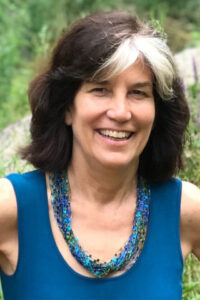
Louisa Wood Ruby
Visiting Fellow, Spring 2022
Louisa Wood Ruby is head of research at the Frick Art Reference Library where she has been in charge of the Center for the History of Collecting, the Digital Art History Lab, and the Scholars’ Program. A specialist in Dutch and Flemish art, she has published a catalogue raisonné of the drawings of Paul Bril; numerous articles in journals such as Master Drawings, Burlington Magazine, and the Journal of Historians of Netherlandish Art; and contributed essays to several symposia proceedings and festschrifts. Her interest in the art collections of the early Dutch in New Netherlands/New York emerged in 2008 with her article “Dutch Art and the Hudson Valley Patroon Painters” published in Joyce Goodfriend’s volume Going Dutch: The Dutch Presence in America 1609–2009 and continued in 2014 with her essay, “Pictures Painted Chiefly in Oils, on Boards: Collecting Dutch Art in Colonial New York,” in the Frick Collection Studies in the History of Art Collecting in America, volume 1: Holland’s Golden Age in America: Collecting the Art of Rembrandt, Vermeer, and Hals. In 2019–20, she co-curated and wrote the catalogue for the exhibition Jan Brueghel the Elder: A Magnificent Draughtsman, held at the Snijders & Rockoxhuis museum in Antwerp. Most recently, she contributed “A Family Affair: Bruegel and Sons in America,” to the Frick’s publication, America and the Art of Flanders: Collecting Paintings by Rubens, Van Dyck, and Their Circles, and “Provenance Initiatives Emerging within the Digital Humanities,” for the book, Provenance Research Today: Principles, Practice, Problems, published by Lund Humphries.
|
|
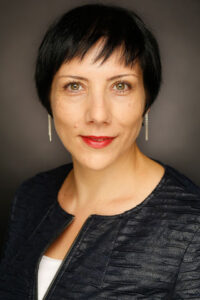
Lisa Regazzoni
Visiting Fellow, Spring 2022
Lisa Regazzoni is professor of theory of history at the University of Bielefeld. She studied philosophy at the universities of Bologna and Heidelberg and earned a PhD in philosophy at the University of Potsdam in 2006. After several fellowships in Paris (Centre Alexandre Koyré, German Historical Institute Paris, École des hautes études en sciences sociales), in London (German Historical Institute), and Princeton (Institute for Advanced Study), she was appointed professor of modern history at Goethe University in Frankfurt in 2019. Her teaching and research interests include theory and history of historiography from the early modern period, scientific and academic collecting, and the historical epistemology and methodology of history with particular attention to the knowledge potential of materiality and things of the past. She addresses this topic in her most recent book Geschichtsdinge. Gallische Vergangenheit und französische Geschichtsforschung im 18. und frühen 19. Jahrhundert (Things of History: Gallic Past and French Historical Research in the Eighteenth and Early Nineteenth Century), which was published in 2020.
|
|
COPY AND PASTE CODE BELOW TO MAILCHIMP
|




 Like us on Facebook
 Follow us on Twitter
 Follow us on Instagram